Calgary's sewers, read from the City's own records.
Our September 24, 2026 snapshot covers 367,397 City-side service lines and 218 communities. Look up your street, compare your community and understand the system your drains feed.
Calgary's sanitary sewer system carries wastewater from every building through a service line to City mains, then by gravity and pump stations to the Bonnybrook, Fish Creek or Pine Creek treatment plant and on to the Bow River. Each connection is split at the lot line: the street-side segment belongs to the City, the house-side segment to the owner. Storm drains are a separate, untreated system.

Age a Calgary service line decade by decade and see who owns each part
Pick a community era or a single community, the City-side material code and what is on your side of the property line. Then press Play to age the connection from its install year to today.
What the model shows, in words
Ownership changes at a dashed line, not at the curb
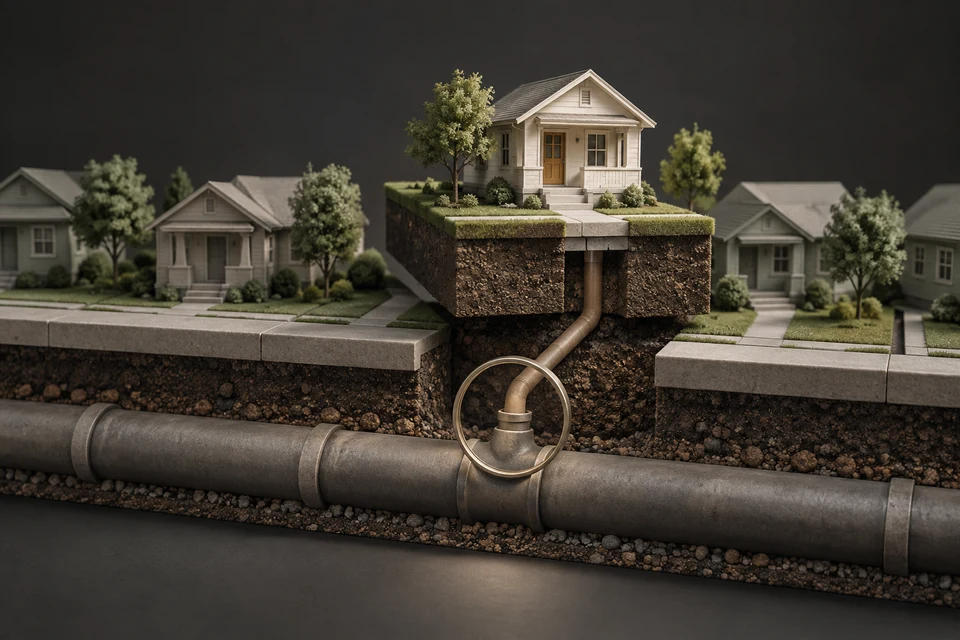
The model splits the connection at the property line and colours each side by who is responsible for it. Everything from the foundation out to that line, including the cleanout and floor drain inside the basement, is the owner's; the stretch out to the main, and the main itself, belong to the City. Tap any ringed part, or use the part picker, to read who looks after it. The rules behind the split are set out in who owns the sewer line in Calgary.
The era picks the pipe, and the record shows the odds
Choosing an era loads the material mix that the City's own records show for that structure class, and the record picker lists every code beside its share. A 1960s or 1970s community starts on the tile code because more than three in four of its City-side lines carry it, while the newest classes are almost entirely PVC. You can also load one community from the Community Sewer Atlas data, and the strip under the street redraws that community's install decades.
Each material ages in its own way
Pressing Play walks the line from its install year to today and adds findings as the years pass. Clay tile shows its joints: a shifted section, roots from the yard tree finding the gap, a crack, then a low spot holding water. Cast iron shows the inside instead, as scale narrows the bore and the invert wears. PVC collects no age findings at all, only dashed possibilities such as settled backfill or damage from later digging. The ages at which marks appear are illustrative, not predictions for any street.
Codes the City never defined stay unknown
OTHER, TP and a blank material field are drawn as grey pipe marked with question marks, because the dataset does not say what they are and the model refuses to guess. That matters most in the inner city, where OTHER sits on most records from before 1950, and in the 1950s class, where TP clusters between 1954 and 1960. Reading the City's service line records explains each code and why a camera run is the only way to settle it.
Renewal on one side does not reach the other
Two switches change one side only. Relining slips a liner inside the City segment in 2018 and restarts its clock, while the private run keeps ageing right beside it. Replacing your side swaps it for PVC in 2010 and leaves the City record exactly as it was. Either way, the two halves of a single connection can end up decades apart, which is why a Service Line Lookup result is a starting point for your side rather than an answer.
Why the main sits below the frost band
The cut face puts the main at least 2.5 m under the road, the minimum cover in the City's design guidelines for sanitary sewers in the public right-of-way, and well below the hatched frost band. That band is drawn deeper under the cleared sidewalk and road than under the lawn, since snow cover insulates the ground. Real depths on a lot come from a locate; how deep sewer lines run in Calgary covers the numbers and the soil.
What do you want to know about your line?
Pick the closest match. Each path goes to the guide that answers it in full.
Calgary Service Line Lookup
Type an address and this tool asks the City of Calgary's open data service, directly from your browser, for the matching sanitary service line record. Enter a house number and street name and it returns the City's record for the public part of your sewer connection: material code and meaning, installed year, diameter, public-side length and building type, plus citywide context and a plain next step. It covers the City-owned portion only.
How the Calgary Service Line Lookup works →
Also freeCommunity Sewer Atlas
Search and sort 218 Calgary communities by City-side sewer service line age and material: clay tile, cast iron, PVC, relined and pre-1960 shares.
Calgary Service Line Lookup
Read these first
Calgary communities by sewer era
All 218 communities grouped by the City's structure class, with clay tile, cast iron, PVC and relined shares for each era and sector.
CornerstoneCommunity Sewer Atlas
Search and sort every community by median install year, clay tile, cast iron, PVC, relined and pre-1960 shares.
CornerstoneHow to read the City's service line records
Every field and material code explained, including the four codes the City does not define and why dates change.
CornerstoneHow Calgary's sewer system works
From your floor drain to the Bow River: service lines, mains, pump stations, treatment and the storm system beside it.
What it looks like down there
Illustrations of what this work involves and what a camera or a trained eye picks up. Every guide on CalgarySewers.ca carries more like these.
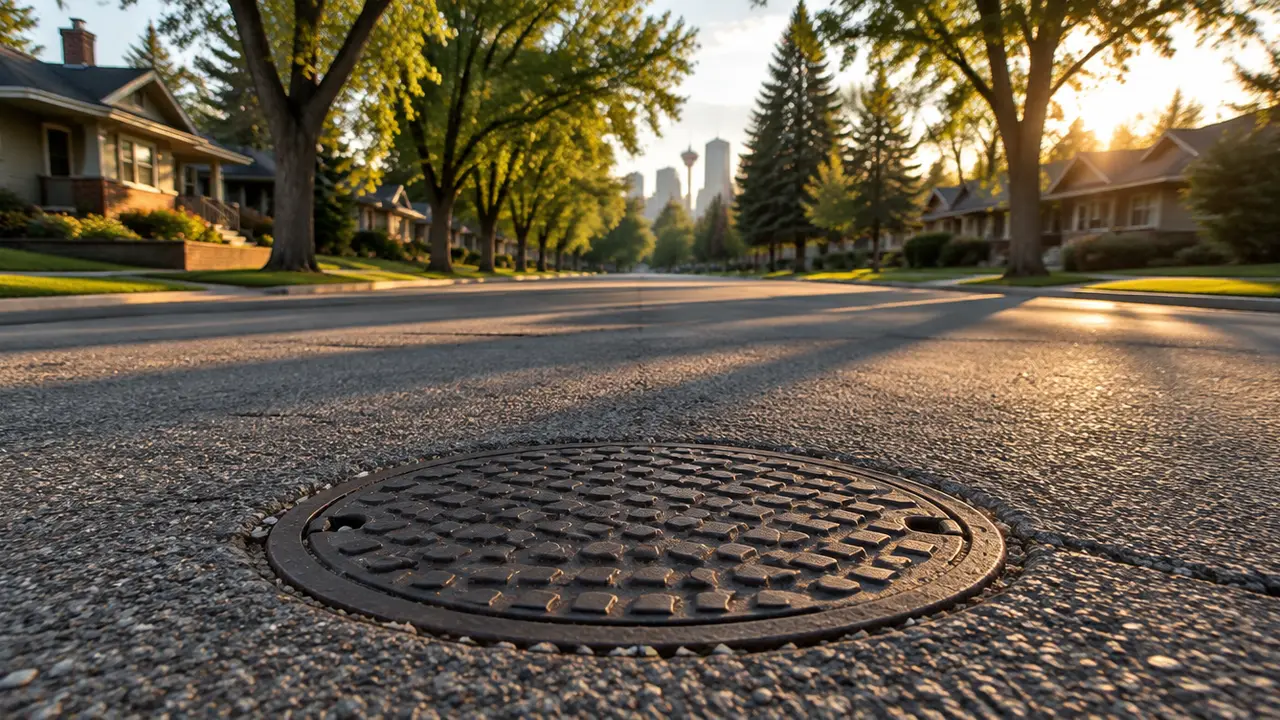
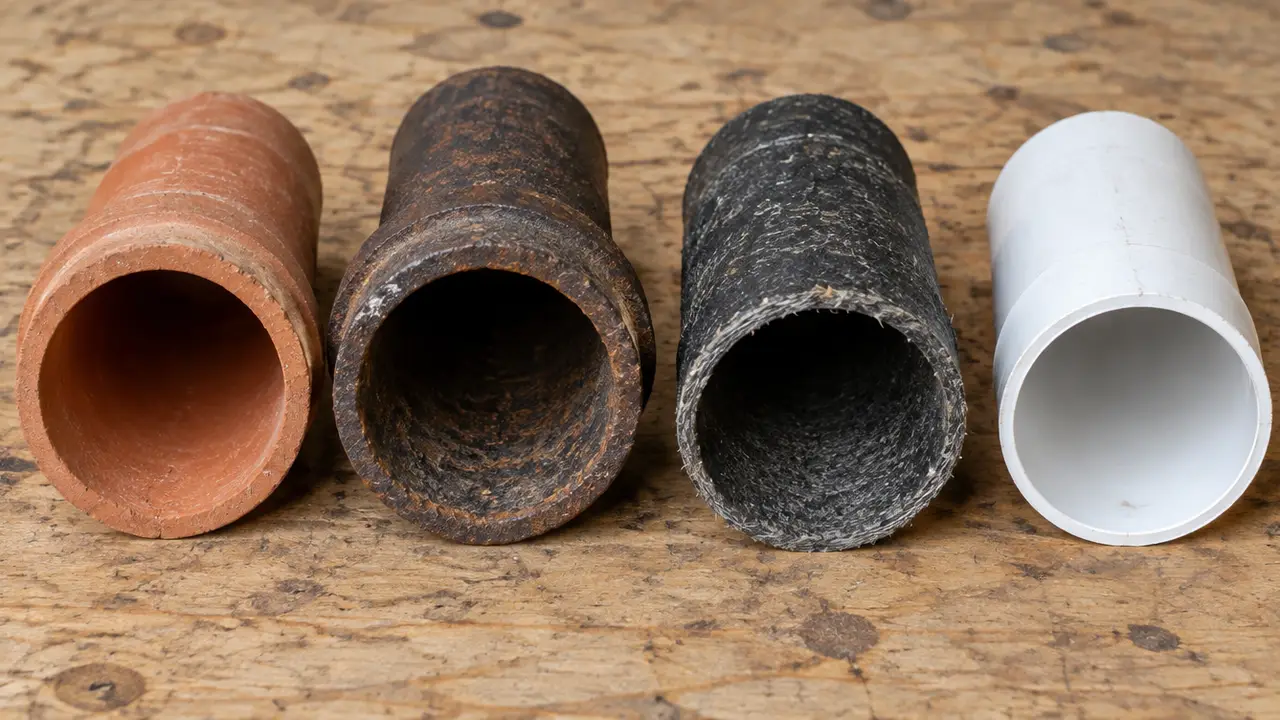
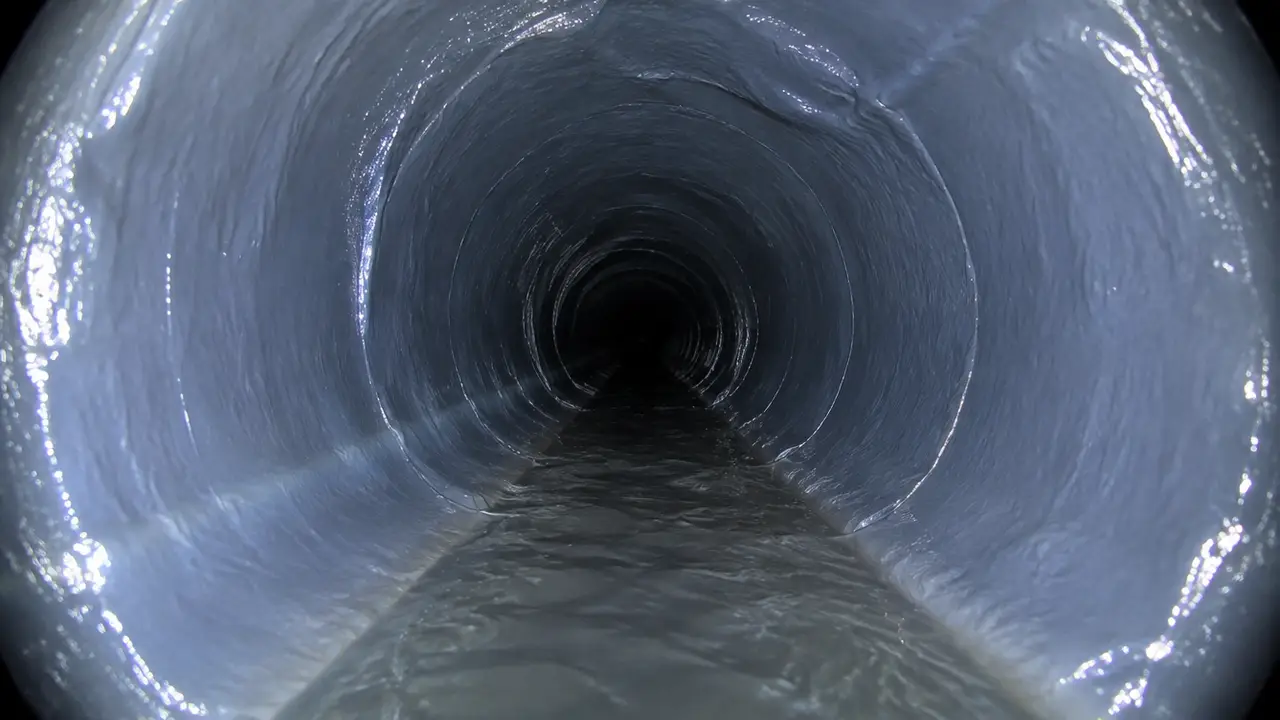

01 /What do the City's records say is under Calgary?
The City of Calgary publishes public sanitary service line records. Our September 24, 2026 snapshot contains 367,397 active service lines, which this site joined to the City's community boundaries and summarized for 218 communities. These are dated atlas totals; the address lookup queries the City's current dataset and can show newer records. The records describe only the City-owned portion, from the sanitary main to the property line. The private portion on each lot can be a different material and age.
| Measure | Value |
|---|---|
| Active City-side service lines | 367,397 |
| Median install year | 1995 |
| PVC | 66.5% |
| TIL, the City's tile code, generally clay tile | 20.2% |
| OTHER, an unexplained code on most pre-1950 records | 5.0% |
| Cast iron | 3.3% |
| TP, an unexplained code on 1954–1960 installs | 2.1% |
| Relined in place (CIPP) | 1.1% |
| Installed before 1960 | 8.4% |
The history reads clearly in the dates. Records coded OTHER dominate until 1953. Cast iron and the unexplained TP code appear in 1954. The tile code arrives in 1958, peaks in 1974 and fades after 1980 as PVC takes over. Since 2017, the City has relined thousands of its segments in older communities. The full story is in Calgary sewer history and renewal.
02 /Which communities were built in which sewer era?
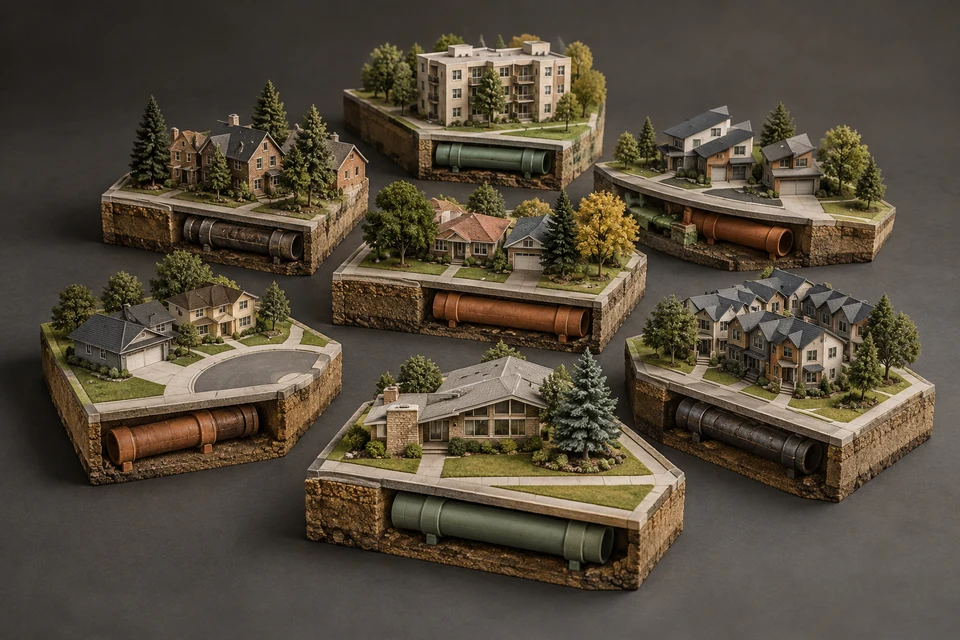
Calgary's communities fall into distinct sewer eras, and the City's own structure classes mostly line up with them, with a few exceptions. Inner-city communities such as Rosedale, Inglewood and Crescent Heights hold the oldest records, with 41.6% of lines dated before 1960 and a large share coded OTHER. The 1950s communities are the most mixed: cast iron leads in Rosscarrock and Bowness, TP in Wildwood and Kingsland. The 1960s and 1970s belt, from Varsity and Brentwood to Lake Bonavista and Rundle, is 77.5% on the tile code. Communities built since the 1980s are 88 to 100% PVC.
- Calgary inner-city sewers: century-old records, the OTHER code and infill.
- Calgary's 1950s communities: cast iron, TP and the first clay tile.
- Calgary's clay tile belt: the 1960s and 1970s communities.
- Calgary's 1980s to 2020s communities: the PVC era and its exceptions.
Sector matters too. The Centre sector has the oldest records, with 43.4% of its City-side lines dated before 1960 and the most relining. The East has the highest tile share, at 42.0%, and the Southeast, home to Cranston, Mahogany, Auburn Bay and Seton, is the newest, at 93.7% PVC. The Community Sewer Atlas filters by sector and by the City's structure class, and its community cards show each decade histogram, so you can see whether a community was built in one burst or has been redeveloped over time.
An era is a starting point, not a verdict. A house in a tile community may have had its private line replaced; a new City record may sit in front of an original private pipe. Use the Service Line Lookup for your address and a camera inspection for your side of the property line.
03 /Who owns what, and who do you call?
The split is written into the City's own open data. Its dataset description assigns the length of pipe between the sanitary main and the property line to The City of Calgary to own and maintain, and the length between the property line and the house to the homeowner. The mains, pump stations and treatment plants are City infrastructure.
- Backups start with 311
The City's guidance after a sewage backup is to stay safe, call 311 and call your insurer. A City crew can snake your cleanout to judge whether the blockage is on private or public property.
- Defects near the street go to 311 too
If a camera shows a problem at or beyond the property line, send the video and distances. The City assesses its own pipe and makes the final determination.
- Your side is yours to inspect and repair
A recorded camera inspection with a locate shows the material, condition and depth of your private segment.
The rules behind it, including the Wastewater Bylaw 14M2012, the Stormwater Bylaw and plumbing permits, are summarized in Calgary sewer bylaws and 311. The City's design standards, including the 2.5 m minimum cover over sanitary sewers in the public right-of-way, are in Calgary sewer design standards.
04 /How does Calgary treat its wastewater?
Three City plants do the work. The City's effluent data show Bonnybrook releasing about 405,000 cubic metres of treated water a day on average in 2025, Pine Creek about 82,000 and Fish Creek about 28,000. Each screens and settles the flow, uses micro-organisms to remove organic matter and nutrients such as ammonia and phosphorus, and disinfects it with ultraviolet light before release to the Bow River. Digested sludge becomes biosolids for farmland or compost.
Storm drains are not part of that path. The City counts more than 60,000 of them and says their water reaches rivers and streams without treatment, which is why oil, paint, soap and yard waste are banned from them. Yet sanitary flows still jump on wet summer days, as rain leaks into cracked and wrongly connected pipes. Read Calgary's wastewater treatment plants, sanitary vs storm sewers in Calgary and Calgary wastewater data and monitoring, which also covers COVID, flu and RSV testing.
CalgarySewers.ca is an independent information site, not the City and not a contractor. When your own line needs a camera or repair, you can request quotes from local contractors; planning ranges, which are estimates and not quotes, are on the Calgary sewer line costs page.
Every guide on CalgarySewers.ca
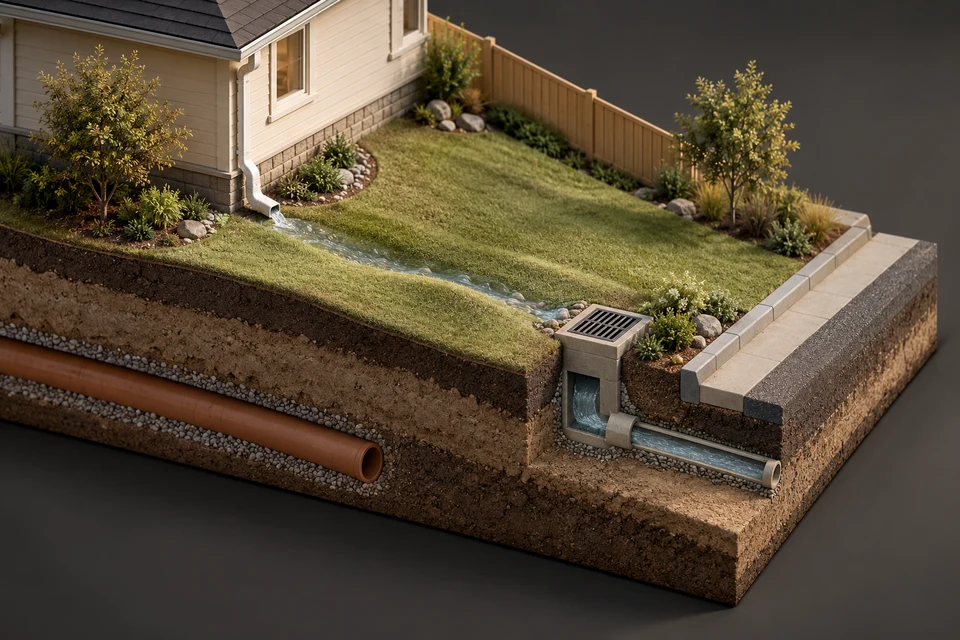
Calgary's drainage bylaw, lot grading rules and drainage permits, explained from the City's own pages
Calgary's drainage bylaw (Stormwater Bylaw 37M2005), the Lot Grading Bylaw and drainage permits: downspouts, swales, sump water, fines and when a permit is needed.
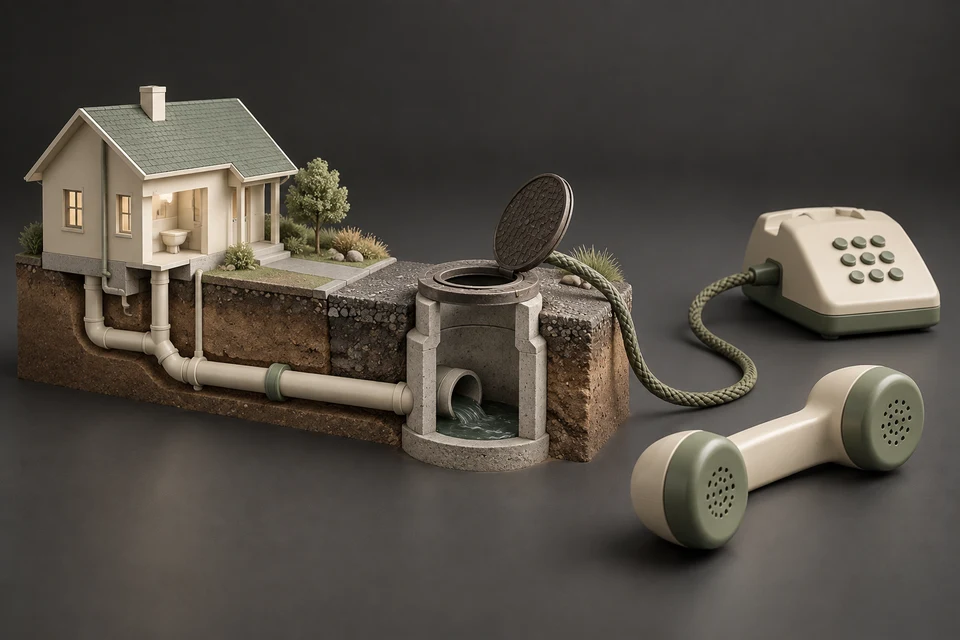
Calgary sewer bylaws and 311: what the rules cover and how to report a problem
Calgary's Wastewater Bylaw 14M2012, the Stormwater Bylaw and related rules in plain language, plus how to report sewer problems to 311 so they get acted on.
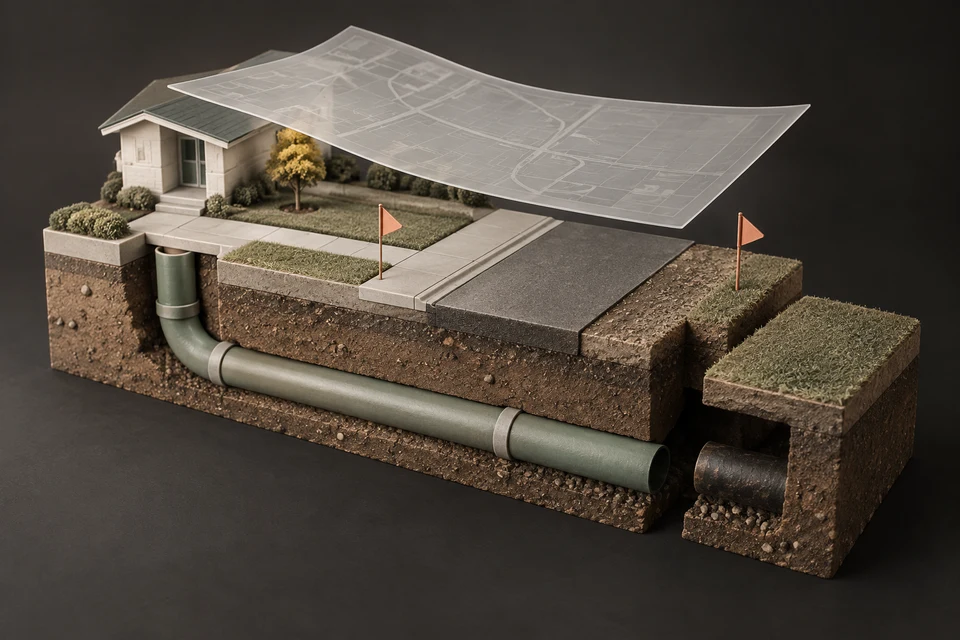
Calgary sewer maps: what is free, what is licensed, and what only a locate can show
Where to find a Calgary sewer line map: the City's free service line open data, licensed sanitary utility maps, free utility locates and private locates.

Calgary water and sewer rates in 2026: what each line on the utility bill pays for
Calgary's 2026 water, wastewater and stormwater rates as published by the City, how the 88% sewer rule works, and worked bills at three levels of water use.

Who owns the sewer line in Calgary? The City's published ownership split, explained
Who owns the sewer line in Calgary: the City's published split at the property line, what City crews check after a backup, and how to raise it with 311.
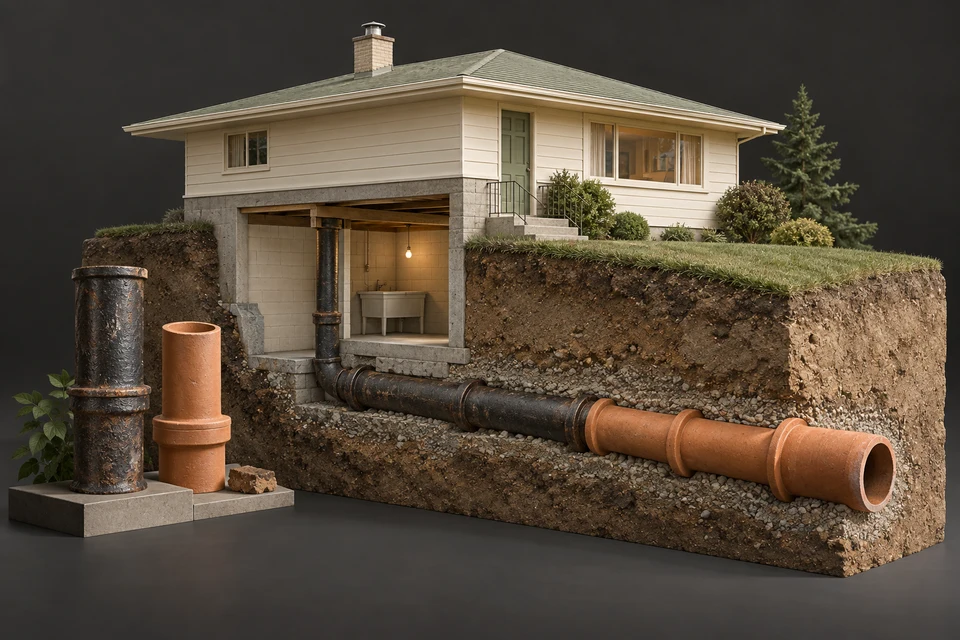
Calgary's 1950s communities: cast iron, the TP code and the first clay tile
What City sewer records show for Calgary's 1950s communities: cast iron in Rosscarrock and Bowness, the TP code in Wildwood and Kingsland, and heavy relining.

Calgary's 1980s to 2020s communities: what the City's records show in the PVC era
Calgary sewer records for communities built since 1980: PVC shares, the 1990s blank-material cluster, label mismatches and what goes wrong in newer lines.
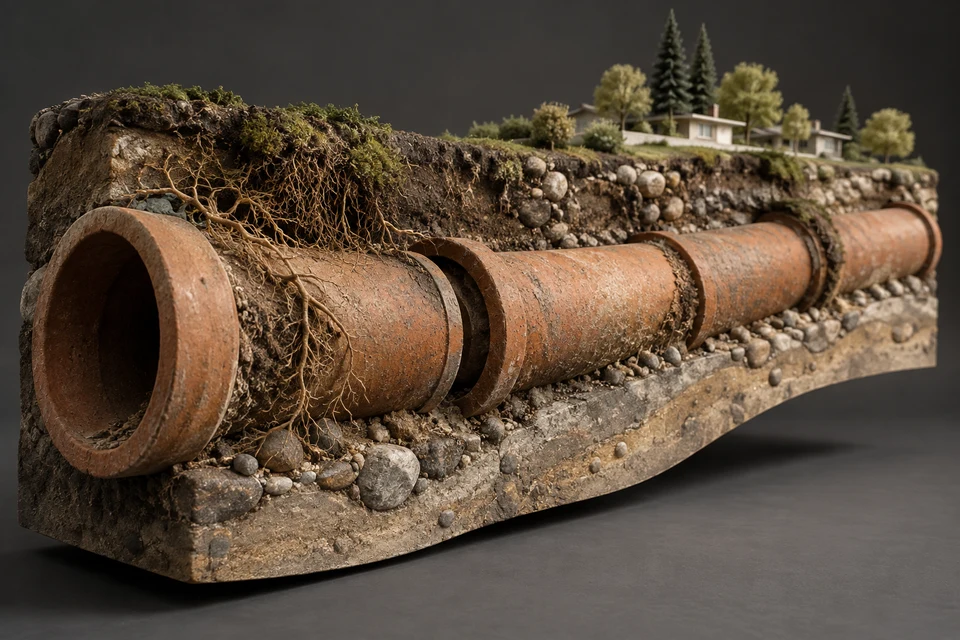
Calgary's clay tile belt: what the City's records show for 1960s and 1970s communities
Calgary communities built on the City's clay tile (TIL) code: 1960s–70s areas like Rundle, Lake Bonavista and Varsity, with shares, dates and what they mean.
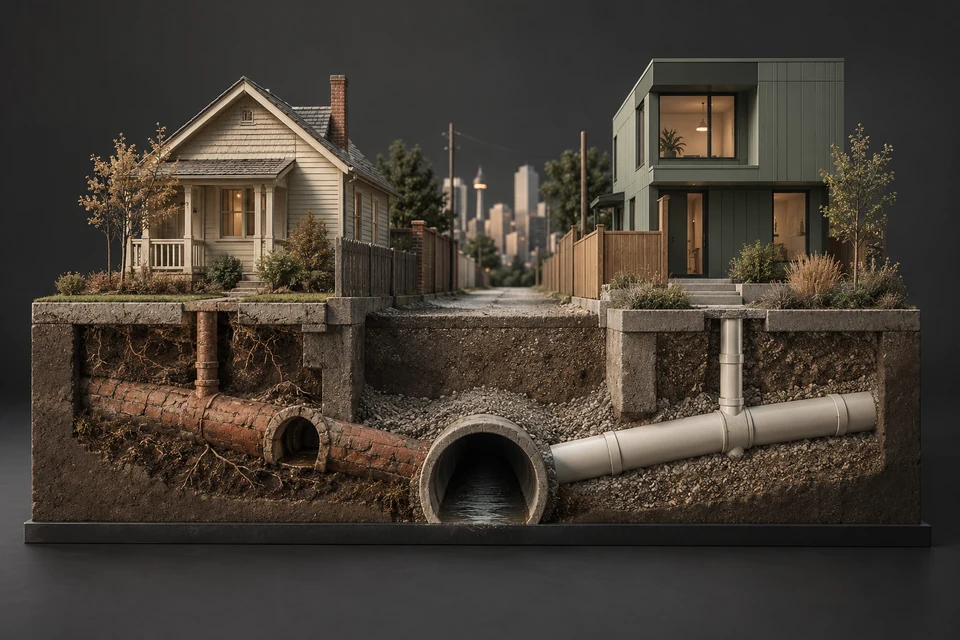
Calgary inner-city sewers: century-old records, the OTHER code and the infill effect
Calgary inner-city sewer records: lines dated back to 1901, the unexplained OTHER code, infill-driven PVC, and some of the most relined communities in the city.

Sewage leaks into the Bow River: the 2025 Bonnybrook leak, the river data and how releases are reported
What happened in Calgary's March 2025 sewage leak into the Bow River, what City river data show upstream and downstream, and how sewage releases are reported.
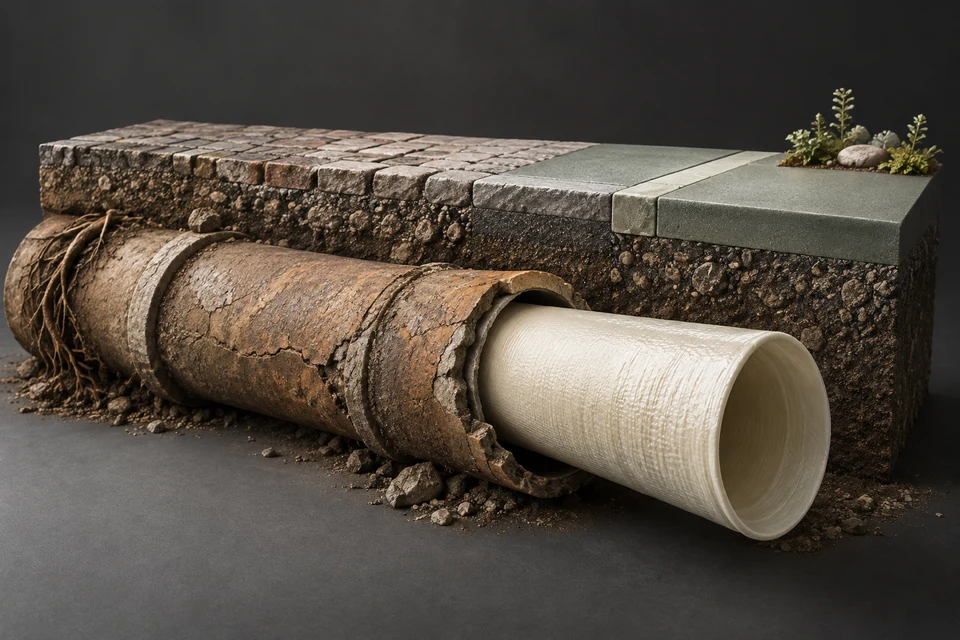
Calgary sewer history and renewal: 120 years of records and the recent relining surge
A short history of Calgary sewer service lines from City records, and the CIPP relining surge since 2017: where, how many, and what it means for homeowners.
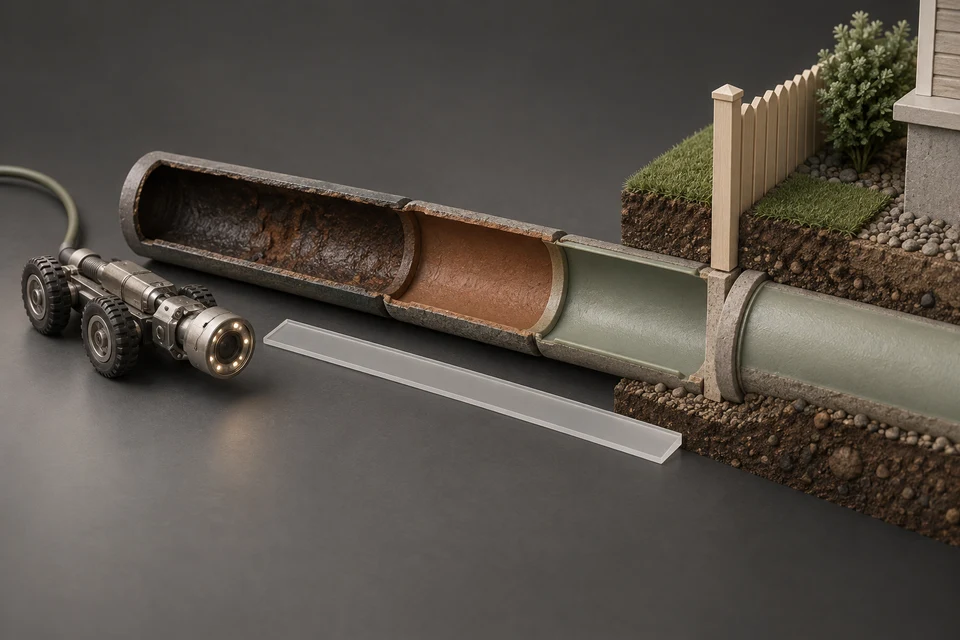
A Calgary sewer scope and the City's service line record: how to line them up
How to read a Calgary sewer scope with the City's service line record: matching lengths and materials, finding the property line, and reporting to 311.

Calgary wastewater data: treatment results, flows and virus monitoring, and how to read them
Calgary wastewater data explained: City effluent quality and flow records, COVID, flu and RSV wastewater monitoring, and sewer service line records.

How to read Calgary's sewer service line records: every field, code and caveat
A field-by-field guide to Calgary's sanitary service line data: material codes like TIL, CI, TP and CIPP, installed dates, diameters, lengths and limits.
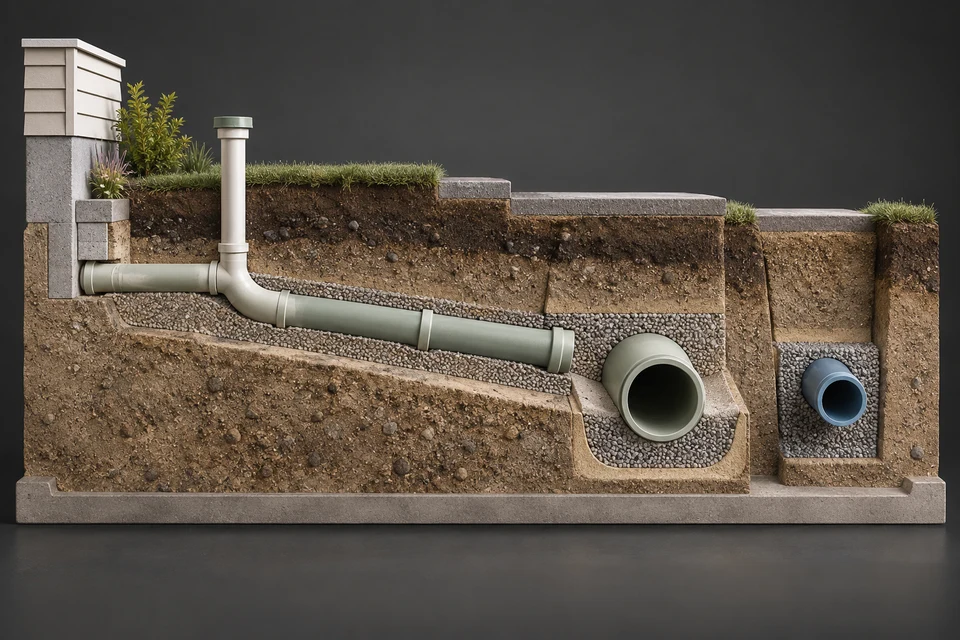
City of Calgary sanitary and storm sewer design standards, in plain language
City of Calgary sewer specifications and design guidelines explained: minimum cover, slope, pipe size and separation, and what they mean for homeowners.
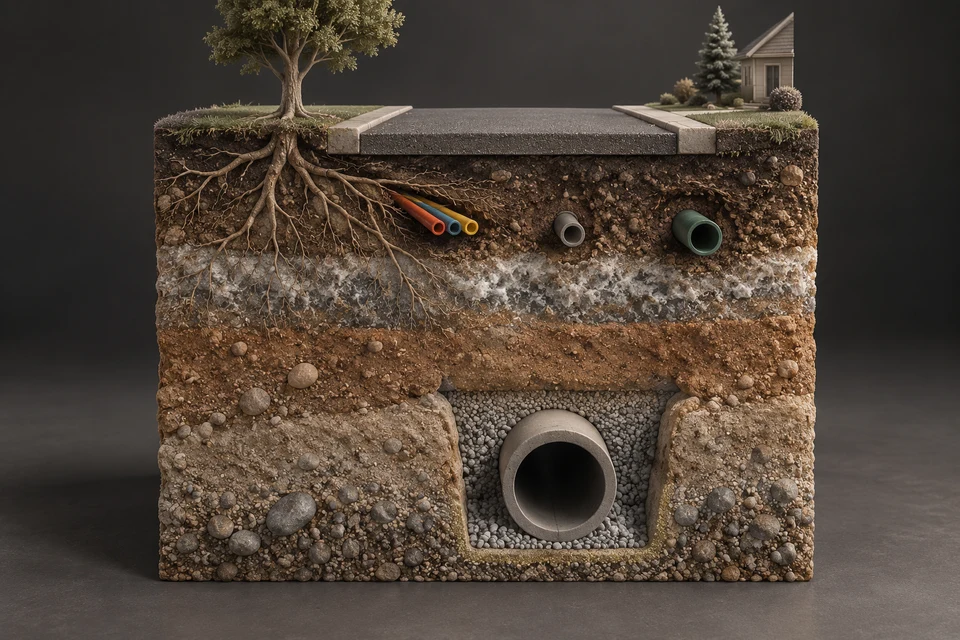
How deep are sewer lines and other utilities buried in Calgary?
How deep sewer lines and other utilities are buried in Calgary: City minimum cover, frost, clay till and gravel, and how to find the depth on your own lot.
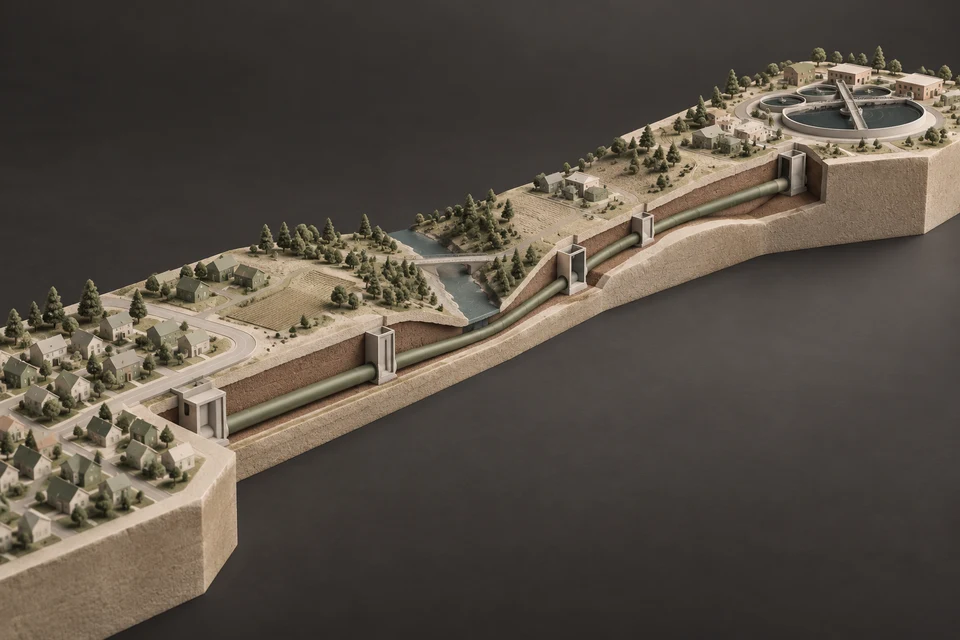
The Airdrie–Calgary wastewater pipeline, and how Calgary treats its neighbours' sewage
The Airdrie–Calgary wastewater pipeline: a 7 km, $114 million line to Calgary's treatment system, plus how Calgary's regional wastewater servicing works.
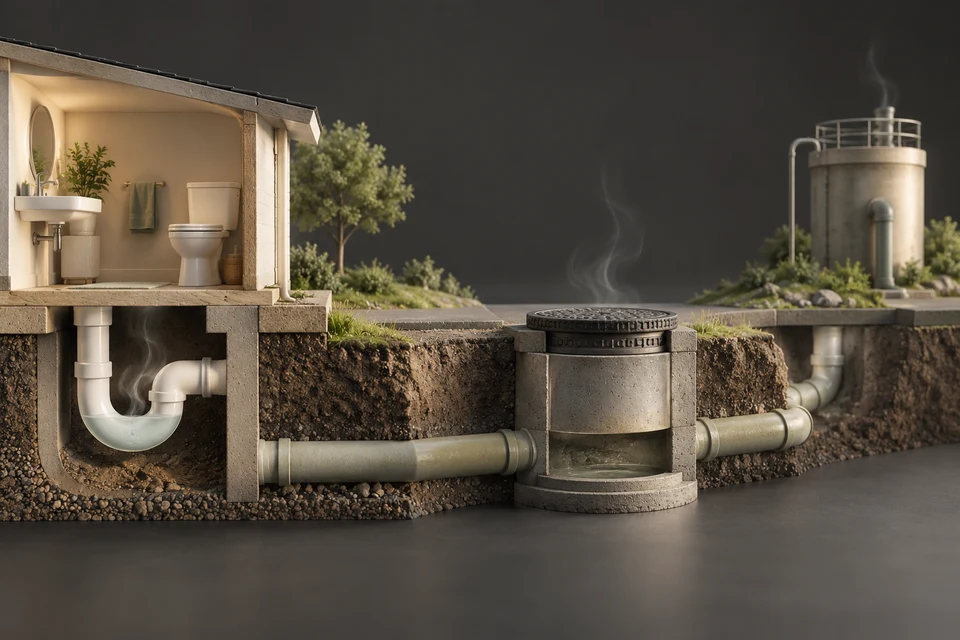
Sewer smell in Calgary: tracing it to the house, the street or a City facility
Where a sewer smell in Calgary comes from: dry traps at home, manholes and lift stations outside, or plants and the Shepard area, and how to report it to 311.
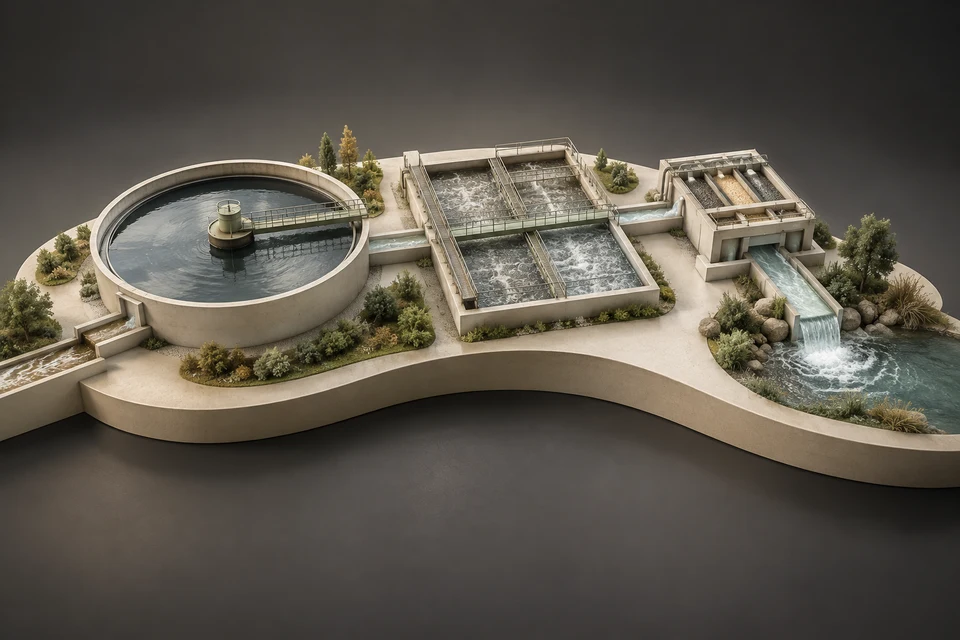
Calgary's three wastewater treatment plants, measured: flows, process and published results
Calgary's Bonnybrook, Fish Creek and Pine Creek treatment plants compared with City data: daily flows since 2008, what each stage removes and the upgrades.
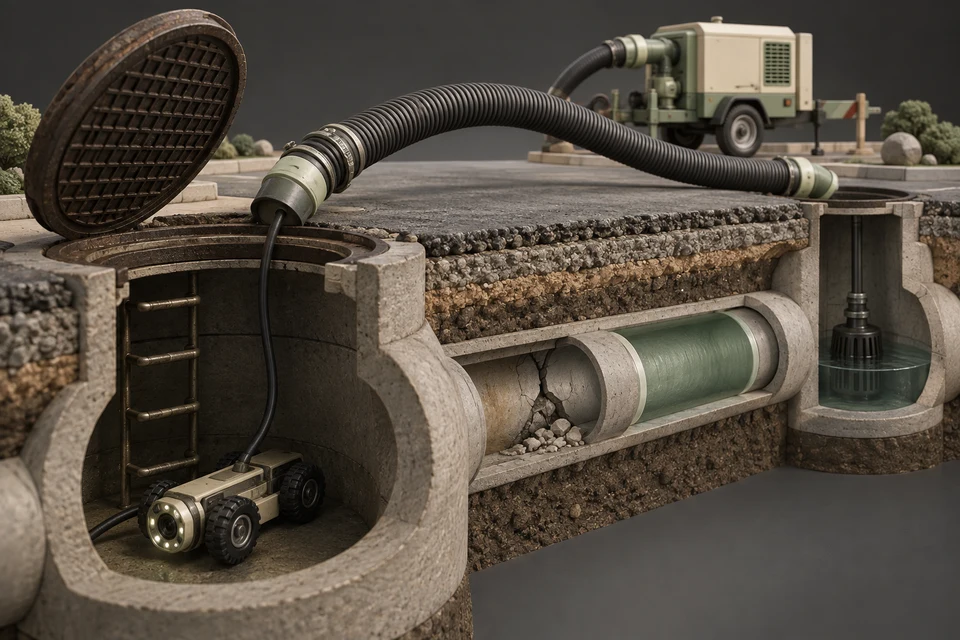
How the City of Calgary maintains its sewers: emergency calls, inspection, lining, replacement and bypass pumping
How City of Calgary sewer maintenance works: backup calls, camera inspection, lateral lining, main replacement, break repairs and bypass pumping rules.
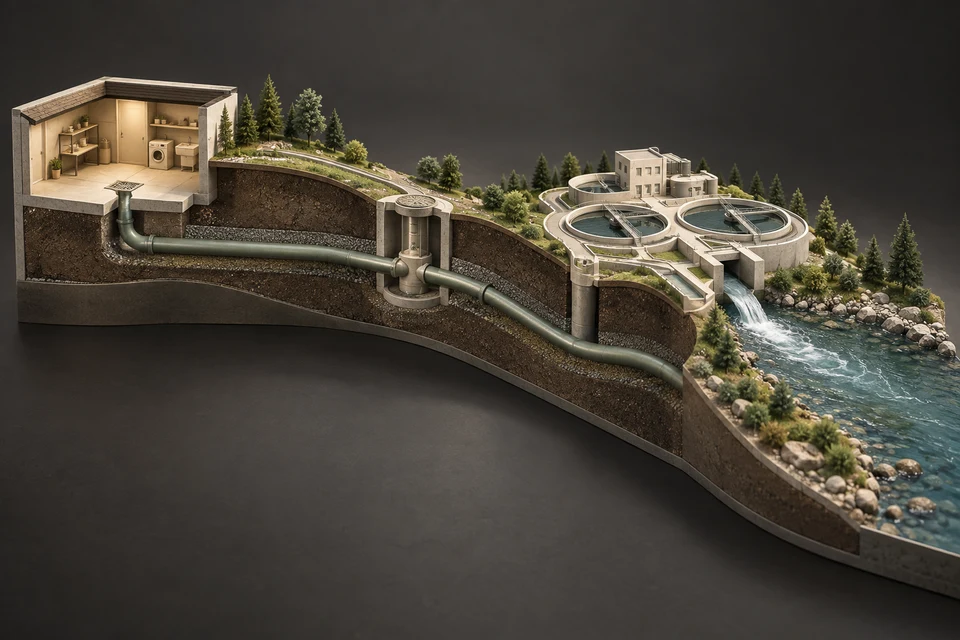
How Calgary's sanitary sewer system works, from your floor drain to the Bow River
What a sanitary sewer is and how Calgary's works: service lines, mains, pump stations and three treatment plants, with numbers from the City's own records.
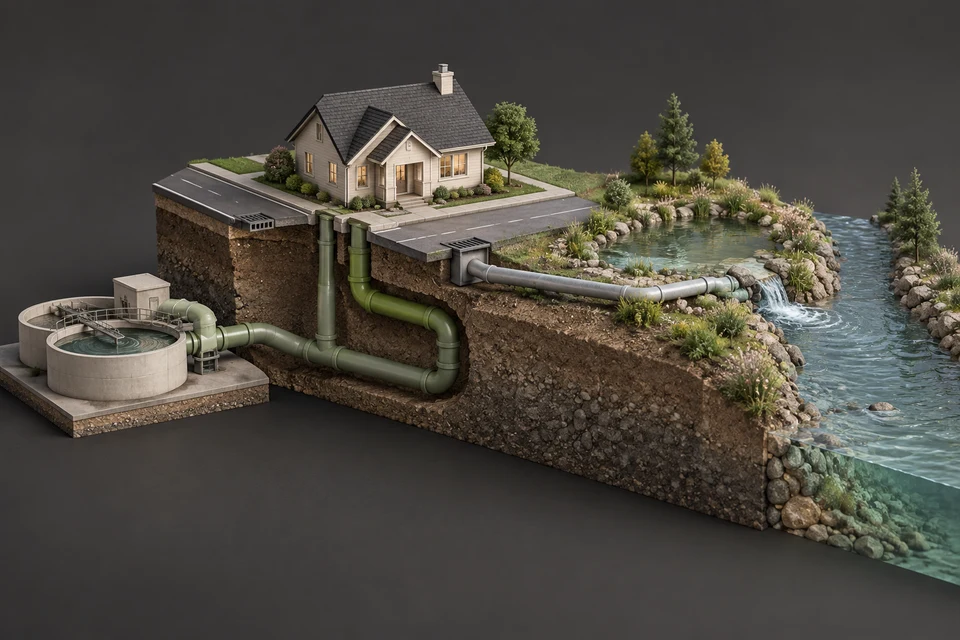
Sanitary vs storm sewers in Calgary: two pipe systems, two destinations
Calgary's sanitary and storm sewers compared: where each goes, what may enter, design depths, ponds and outfalls, and why storms still cause basement backups.

Calgary sewer line costs: what the City record, the ownership split and length mean for the bill
Calgary sewer line costs for 2026: camera and locate costs, replacing 30 feet (9 m) of line, who pays on each side of the property line, and why era matters.
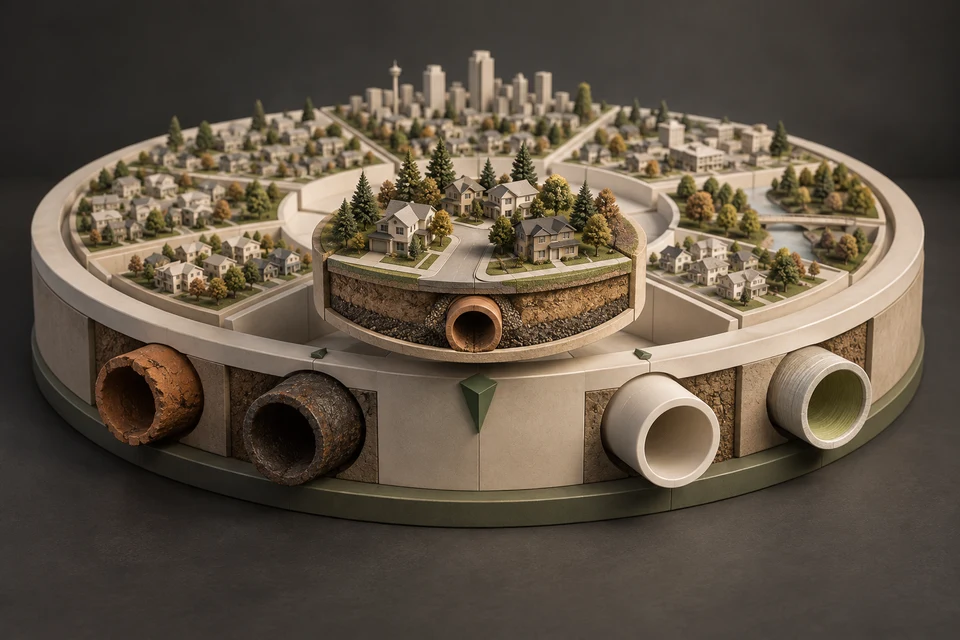
Community Sewer Atlas: compare the City-side sewer record of 218 Calgary communities
Search and sort 218 Calgary communities by City-side sewer service line age and material: clay tile, cast iron, PVC, relined and pre-1960 shares.
Calgary Service Line Lookup: read the City's record for your sewer connection
Look up the City of Calgary's record for your sanitary service line: material code, install year, diameter and public-side length, straight from open data.
Calgary communities by sewer era: what the City's records show, community by community
Calgary's 218 communities grouped by sewer era from City open data: clay tile, cast iron and PVC shares by structure class and sector, plus local conditions.
Frequently asked
What is the City of Calgary's sewer service line record?
It is the City's open dataset listing material, installed date, diameter, public-side length and building type for City-owned sanitary service segments. Our September 24, 2026 atlas snapshot contains 367,397 active records; the live dataset can change as the City updates it.
Who owns the sewer line in Calgary?
The dividing point is the property line. Pipe on the street side, back to the main, is municipal; pipe on the house side is yours. For a particular problem, ask 311.
Which Calgary communities have clay sewer lines?
The tile code leads the City-side record across the 1960s and 1970s belt: Maple Ridge, Rundle, Marlborough Park, Willow Park, Lake Bonavista and dozens more. Nobody publishes the private side.
Where does Calgary's sewage go?
To the Bonnybrook, Fish Creek or Pine Creek wastewater treatment plant, and then, treated and UV-disinfected, into the Bow River.
Is there a map of Calgary's sewer lines?
The City's service line data are free and mapped but cover only City segments. Mains and manholes appear on licensed maps sold through City Online. Your own line is found with a locate or a camera and sonde.
Is CalgarySewers.ca run by the City of Calgary?
No. It is an independent site that analyses the City's open data and links to official sources. Official decisions and service requests go through 311.
Describe the problem once. Get a straight answer.
Send the symptoms and anything you already know — age of the house, what a camera found, what you have been quoted. The HAUSE Sewer desk replies with next steps and, where available, a local contractor for the job.
Sewage backing up right now? Stop using water, keep people away from the water, and do not touch electrical equipment near it.